This project was developed to improve the daily living experience for residents at St. Joseph's Lifecare Centre, a long-term care facility. The goal was to address challenges related to facility navigation, engagement in programs, and inclusivity, especially for residents with cognitive impairments.
This project involves extensive user research, including interviews and observations with residents to deeply understand their needs. The solution aims to enhance resident autonomy, community engagement, and overall well-being.
We began by meeting with St. Joseph's administration to align on business goals, followed immediately by on-site immersion. We didn't want to assume the problems — we wanted to see them.
After gathering hundreds of data points, we moved to FigJam to conduct an Affinity Mapping session — sorting the chaotic raw feedback into structured patterns. We also synthesized four distinct user personas to represent the resident population.
Answers from resident interviews were grouped into sub-categories. We narrowed our focus to 3 groups: Autonomy & Freedom, Community, and Well-Being.
Solution Strategy: Design opportunities were identified to enhance resident engagement and improve overall satisfaction within these focus areas. This solution space helped us form the solution of creating a hub and chatbot which improve their lives at St. Joseph's. The clients approved our solution.
Based on the Affinity Mapping, we synthesized four distinct user personas to represent the resident population and guide design decisions.
Vibrant resident who cherishes independence. Deeply appreciative of community but seeks spiritual connection.
InterestsPainting, Drawing, Guitar, Bible Study.
Short-term: Establish prayer group, join high-quality arts programs.
Long-term: Enhance community through spiritual practice.
Pain PointsFeels isolated during outbreaks. Desires more inclusivity in spiritual services.
Feels autonomous but limited by activity options. Wants "high quality" engagement.
Community & Well-beingRecovered from comatose state. Walks independently. Wants community more open to spirituality.
Deeply involved in resident council. Finds joy in small things (TV, gardening). Appreciates freedom and friendly atmosphere.
InterestsDarts, gardening, watching TV.
Short-term: Continue leading effectively, ensuring voices are heard.
Long-term: Maintain health and contribute positively to community.
Pain PointsContent with life, but invests effort in maintaining friendly atmosphere for others.
Feels completely free to make own choices. Content with current level of activity.
Community & Well-beingEasy to make friends. Very involved in council. No specific health concerns. Very independent.
Enjoys variety. Feels facility needs more workers. Active involvement in woodworking, darts, puzzles.
InterestsDarts, puzzles, woodworking, gardening, bowling.
Short-term: Increase staff availability, enhance program range.
Long-term: Foster a cohesive and encouraging community environment.
Pain PointsStaff shortages impact experience. Desires more engaging and diverse initiatives.
Takes part in broad range of programs. Wants staff support for building friendships.
Community & Well-beingActive member with close friends. Expresses need for additional nursing staff.
Cherishes independence. Physical space organized around books. Passion for reading highlights independent nature.
InterestsOutdoor activities, reading, puzzles, movie nights.
Short-term: Establish a book club and participate actively.
Long-term: Maintain independence and continue exploring interests.
Pain PointsTransportation issues limit freedom. Seasonal depression in winter months.
High degree of independence (laundry, computer). Wants movement without scheduling hassles.
Community & Well-being3 close friends. Desires intellectual life (book club). Manages health well despite seasonal depression.
After all the analyzations, it was time to come up with a wireframe that translated the research insights into a simple, user-friendly interface. The low-fidelity prototype focused on displaying key functionalities.
The low-fidelity prototype focused on displaying key functionalities like accessing daily activities, checking the calendar, and providing quick assistance through a virtual assistant or personal help. This design ensured clarity and ease of navigation, tailored to meet the needs of residents with varying levels of tech comfort and accessibility requirements.
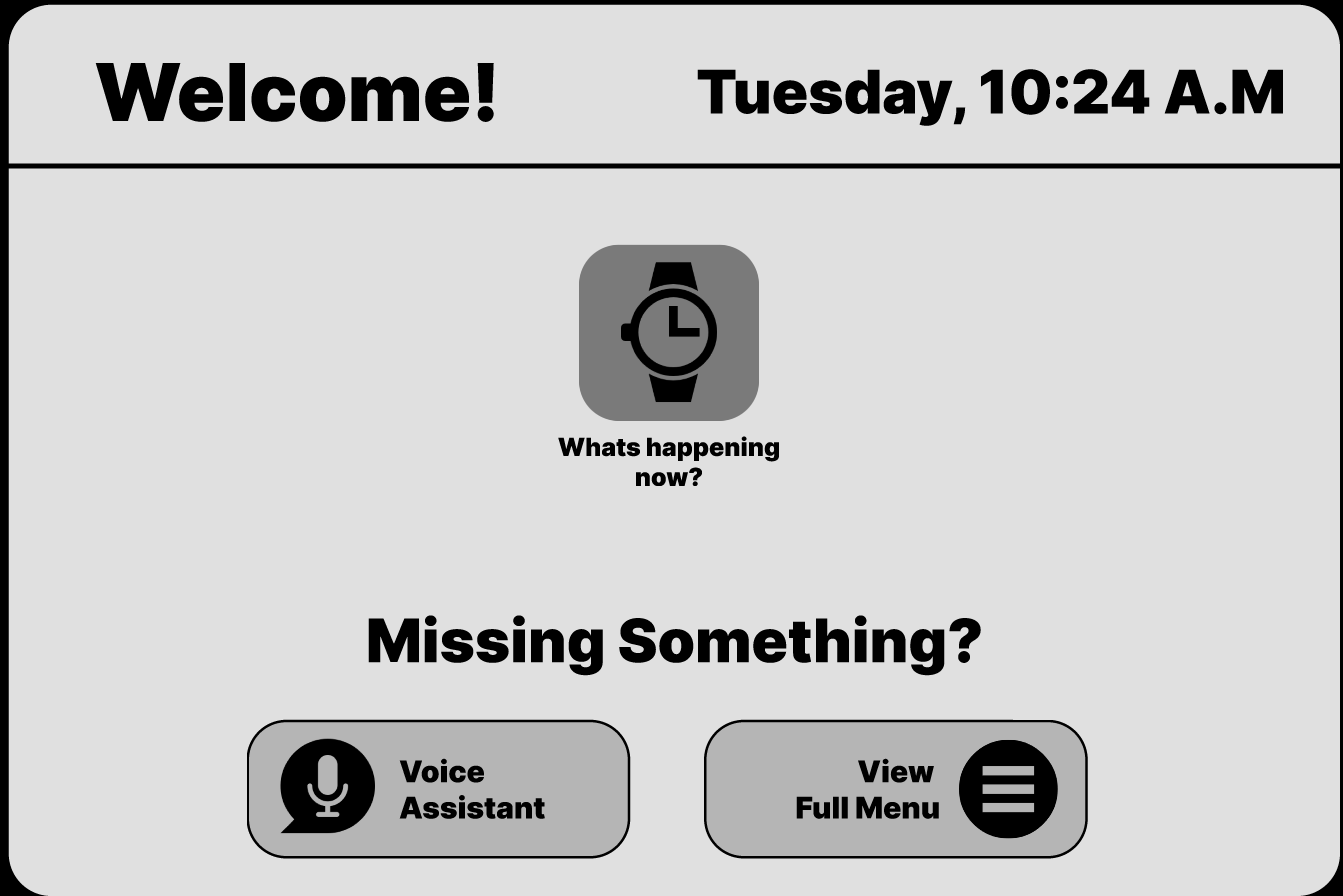
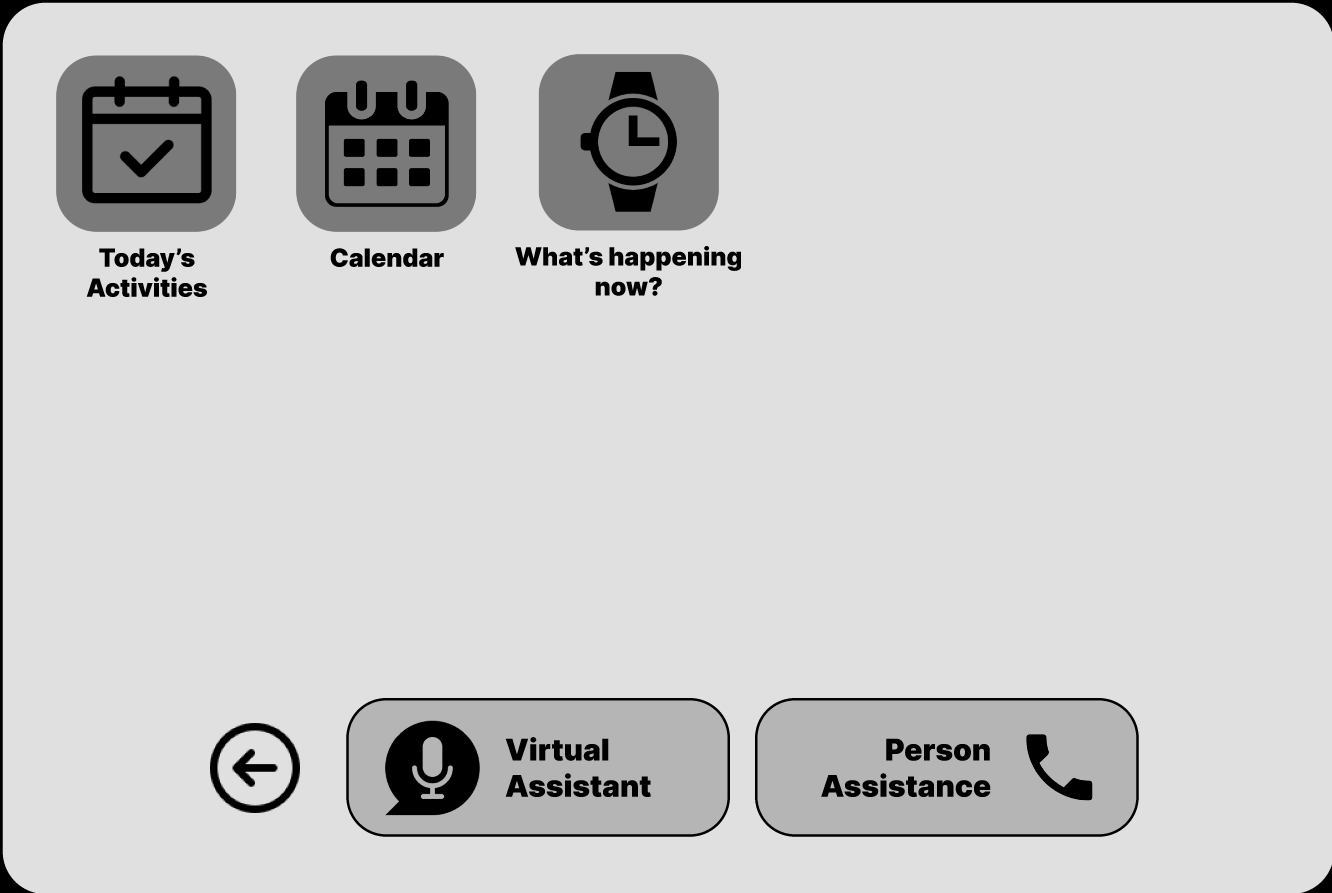
Low, medium, and high-fidelity prototypes were created on Figma. User testing was done with residents using Figma's prototyping mode, and usability testing was conducted ensuring responsiveness and user interactivity.
First iteration of the medium fidelity design focusing on core functionality and layout.
Testing results showed users found the interface straightforward but requested drag-buttons and larger icons, also simplified navigation. Virtual assistant was also well received as an accessible feature for users with limited mobility. Improvements to schedule interface were well received.
Feedback from the high fidelity prototype was incorporated into the updated design of the final prototype. The voice assistant was shown to the users. We presented our project to the judges, clients & sponsors, and received very positive feedback from the client.
In conclusion, the project at St. Joseph's Lifecare Centre successfully bridged the gap between resident needs and technological solutions through a thoughtful user-centered design approach.
By conducting comprehensive user research, synthesizing insights into personas, and translating those insights into practical wireframes, we developed a platform that enhances resident autonomy, community engagement, and overall well-being. The low-fidelity prototype provided a foundational step towards creating a user-friendly interface that supports daily activities and personalized assistance.
Ultimately, this project not only improved the quality of life for the residents but also demonstrated the power of design in creating meaningful, positive change in healthcare environments.